July 2, 2026
MedLife and the Next Stage of Digital Medicine
In the first chapters of the “Champions of Digitization” series, digitization is presented as a solution to very specific problems: excessively long response times, pre-analytical errors, staff shortages, fragmented infrastructure, and the need for integration between systems and departments.
But what happens once these systems start operating? What comes next after automation?
In some healthcare organizations, the laboratory is beginning to take on a new role. It is no longer just the place where test results are processed. It is becoming a medical data infrastructure—a platform capable of generating predictive insights, supporting personalized medicine, and contributing to the development of new models for disease prevention and health monitoring.
At MedLife, this transformation is already beginning to take shape.
From large volumes of test results to medical data infrastructure
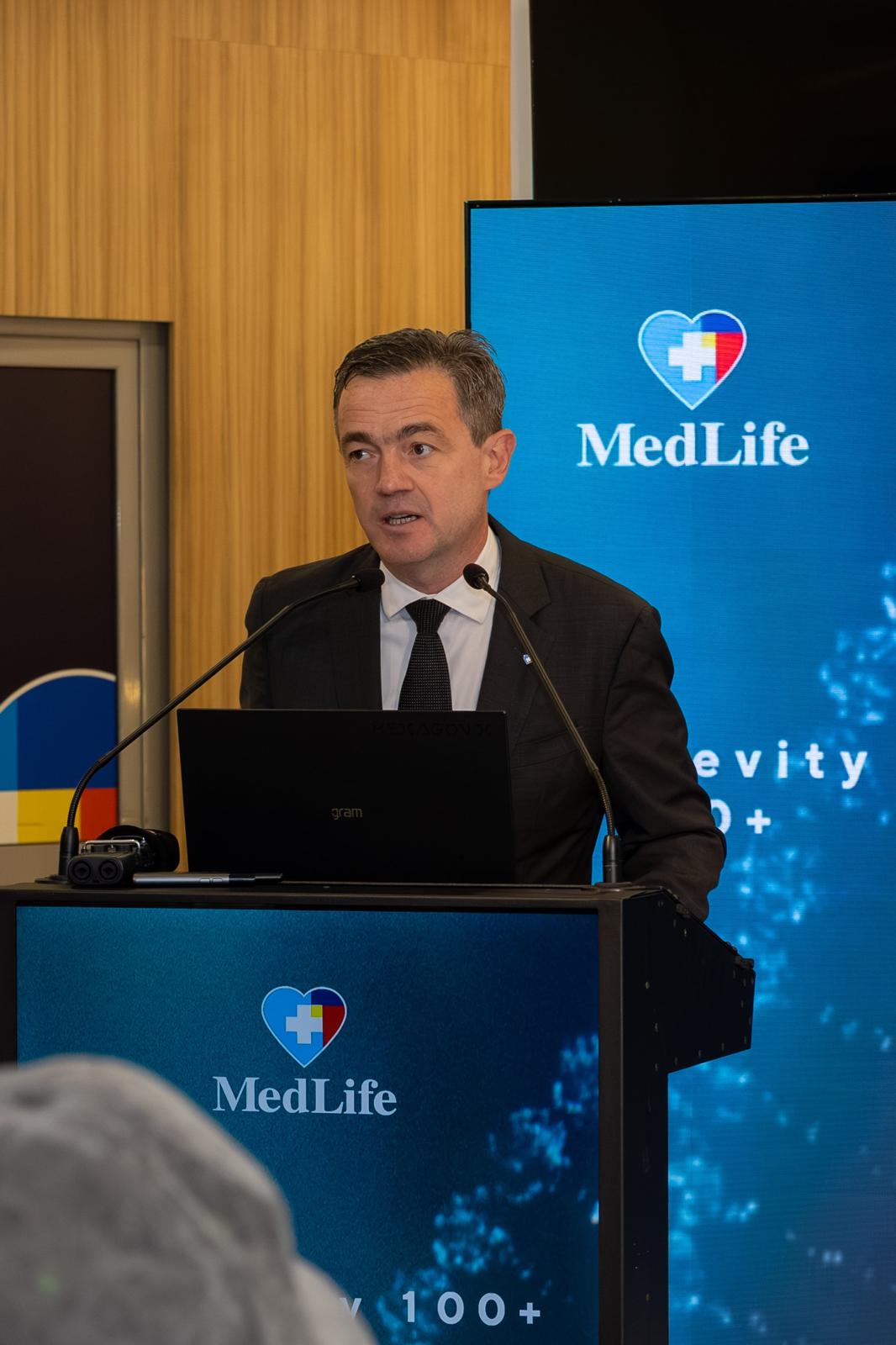
In recent years, MedLife has built one of the largest private healthcare infrastructures in Romania, with extensive operations in laboratories, imaging, genetics, and integrated clinical services.
In such a system, the laboratory no longer generates only individual results for a specific medical episode. It generates very large volumes of longitudinal medical data—results accumulated over time, correlated with the patient’s medical history, lifestyle, imaging studies, and genetic profile.
This change fundamentally alters the role of the laboratory.
The classic model was reactive: the patient would come in with a problem, and the laboratory would answer a specific clinical question. The new model is becoming predictive:medical data can help identify risks before the disease becomes clinically apparent.
The laboratory thus becomes not just a processing facility, but a source of medical intelligence.
Predictive medicine starts with data
One of the areas in which MedLife is focusing its development efforts is preventive and personalized medicine based on integrated data, genomics, and longitudinal monitoring.
It is within this framework that the LONGEVITY 100+ project was conceived, based on the idea that the medicine of the future will no longer intervene only when disease strikes, but will seek to identify biological imbalances, risk factors, and the mechanisms that accelerate aging or the onset of chronic diseases at an earlier stage.
For such a model to work, however, it takes more than just high-performance equipment. It requires a digital infrastructure capable of integrating and standardizing very large volumes of medical information. This is where one of the most important challenges of the next decade in healthcare begins: data quality and interoperability.
Medical AI begins before algorithms
There is a great deal of attention focused on artificial intelligence today. But in practice, the value of medical AI depends on something far less visible: the underlying data infrastructure.
Without standardized, integrated, and comparable data, algorithms cannot generate clinically relevant results.
From this perspective, the digitization of laboratories becomes more than just an operational project.
It serves as the foundation upon which decision-support systems, predictive models, and personalized medicine tools can subsequently be built.
Automation, middleware, interoperability, and the integration of IT systems are becoming essential components of an AI-ready healthcare infrastructure.
The Laboratory of the Future
In the traditional model, the laboratory was viewed as a support structure for clinical practice.
In the new model, the laboratory begins to play a much more central role in the digital healthcare ecosystem:
- generates massive amounts of data,
- contributes to preventive medicine,
- supports personalized medicine,
- feeds into analytical algorithms and predictive models,
- and builds the infrastructure needed for the next generation of digital healthcare services.
This transformation does not mean that the role of the physician is disappearing. On the contrary. As the volume of data increases, clinical interpretation, medical context, and human decision-making become even more important.
But the relationship between medicine, the laboratory, and technology is beginning to change.
And in many healthcare organizations, this change has already begun.