June 15, 2026
 The stories in this series explore how digitization is changing things: shorter turnaround times, faster results, laboratories processing ever-increasing volumes of tests, and hospitals beginning to operate differently.
What isn’t always visible is the mechanism behind it all. What happens to a biological sample from the moment it’s collected until the result reaches the attending physician. How the systems communicate with each other. Where most errors occur. And why integration is often more complicated than purchasing the equipment.
A digitized laboratory isn't just about high-performance analyzers. It's about an integrated system in which samples, equipment, and software applications work together in a continuous workflow.
The laboratory process has three major phases: preanalytical, analytical, and postanalytical. Automation plays a different role in each of these phases. And an important point to note is that most errors do not occur during the analysis itself, but before the sample enters the instrument.
60–70% of laboratory errors occur during the preanalytical phase
Phase 1 — Preanalytical: From Collection to Sample Introduction into the Analyzer
The preanalytical phase begins when the physician orders the test and ends when the biological sample enters the analyzer. It includes the collection, labeling, transport, and receipt of the sample at the laboratory.
In a traditional system, many of these steps are performed manually. Samples are labeled and transported by hand, and upon receipt, lab staff check each test tube individually.
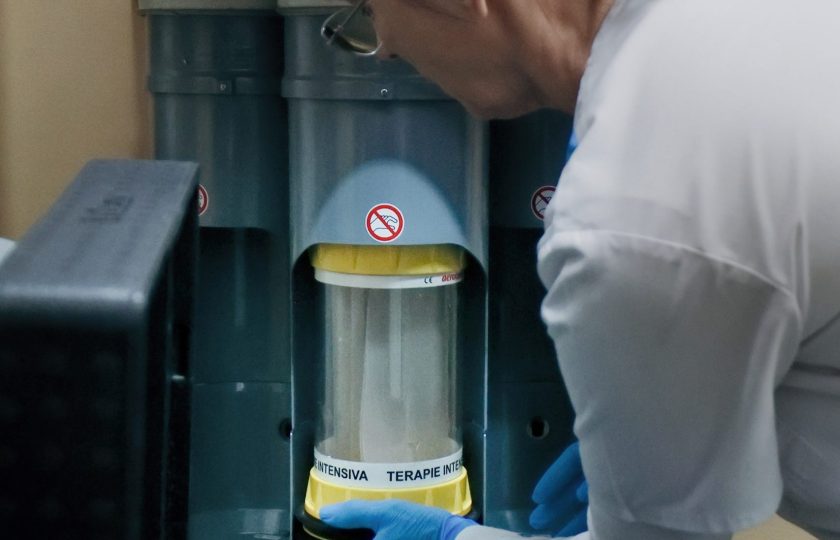
In a digitized laboratory, each sample is assigned a unique identification code generated automatically by the computer system. Samples can be transported via pneumatic tube or automated systems, and upon entering the laboratory, they are scanned and automatically routed to the appropriate analyzer.
The system can automatically detect non-compliant samples—such as insufficient, damaged, or incorrectly labeled samples—significantly reducing the risk of human error and ensuring full traceability of each sample.
Phase 2 — Analytics: The Actual Processing
The analytical phase involves the actual processing of samples in analyzers. In modern laboratories, many of these processes are already automated. However, the difference in a fully digitized laboratory lies in the level of integration and continuous monitoring.
The analyzers are connected to the LIS—the laboratory information system—which manages the flow of samples, results, and the validation of analyses. Quality controls, calibrations, and equipment performance monitoring are tracked continuously, in real time.
Urgent samples received from the emergency department or the intensive care unit are automatically identified and prioritized in the workflow, without manual intervention.
The result is a faster, more stable, and more predictable laboratory, capable of handling large volumes of tests with a low risk of error.
Phase 3 — Post-analytical: From the results to the attending physician
The post-analytical phase begins when the analyzer generates the result and ends when the attending physician uses it to make a clinical decision.
In a non-digitized system, results are often printed, transferred manually, or entered separately into other computer applications.
In a digitized laboratory integrated with the hospital’s systems, test results are automatically uploaded to the patient’s electronic health record immediately after validation. The system can compare current values with the patient’s history and generate automatic alerts for critical results.
The impact is immediate: results are shared more quickly, doctors receive the information in a clinical context, and the time it takes to make a treatment decision is reduced.
A modern laboratory operates by connecting multiple systems that must communicate with one another in real time. The HIS—the hospital information system—manages patients’ clinical data. The LIS—the laboratory information system—manages test requests, results, and their validation. In between them lies the middleware—the software layer that connects the equipment, filters relevant information, and coordinates the laboratory’s workflows. Added to all this are the analyzers and the physical automation lines through which the samples flow.
Questions a manager should ask before making a decision
- What is the actual volume of evidence, and what level of automation is warranted?
- Where do most errors occur today: during harvesting, transportation, analysis, or the transmission of results?
- Do the existing IT systems allow for integration with the LIS and the laboratory equipment?
- Does the available space allow for the installation of an automation line?
- How prepared is the team for change and for the new workflows?
In many projects, these questions have a greater impact on the final result than the choice of the analyzer itself.
The digitization of medical laboratories is not a single project, and there is no one-size-fits-all model. However, there are clear principles, the experience of those who have already implemented these systems, and concrete evidence that they can work in Romanian hospitals as well.
The difference becomes apparent when systems are designed to work together—from sample collection and transport all the way to the results reaching the attending physician.
Elena Ovreiu
Founder of HealthTech Forum Europe
Assistant Professor, Politehnica National University of Science and Technology, Bucharest
Author — Smart Hospital: A Practical Guide to Digital Transformation in Hospitals