November 18, 2026
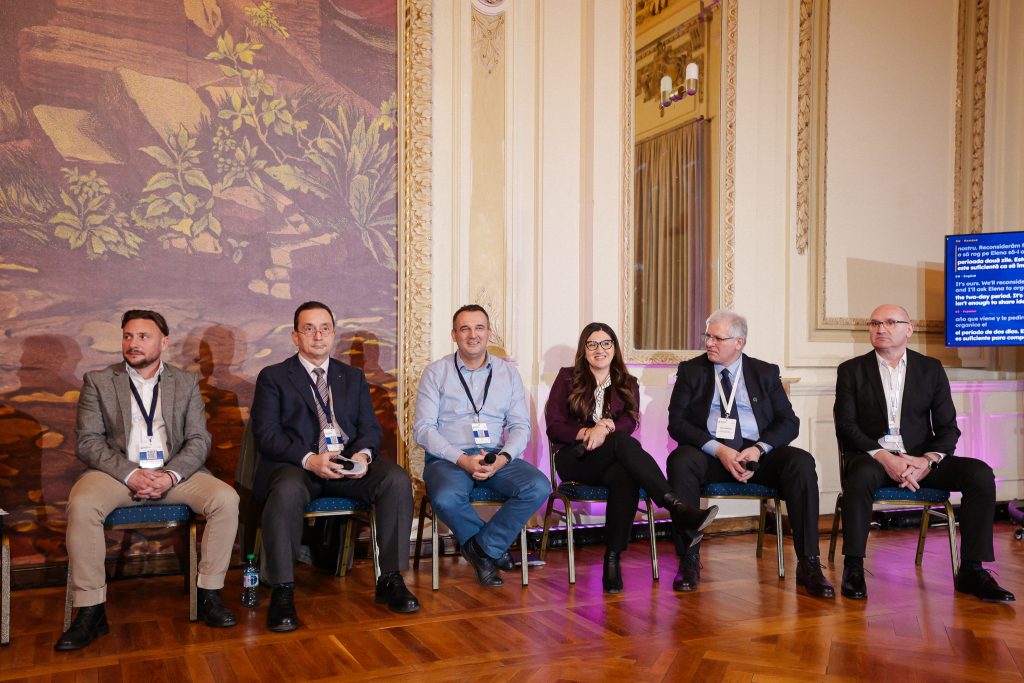
Hospitals are investing in increasingly advanced medical equipment, but they do not always have the specialists needed to monitor its operation, prevent technical problems, and ensure its safe use. At the same time, universities in Romania graduate hundreds of medical engineers and bioengineers every year. How can this gap be bridged? That was the central question of the final panel at the HealthTech Forum 2026, which brought together representatives from hospitals, universities, government agencies, and industry.
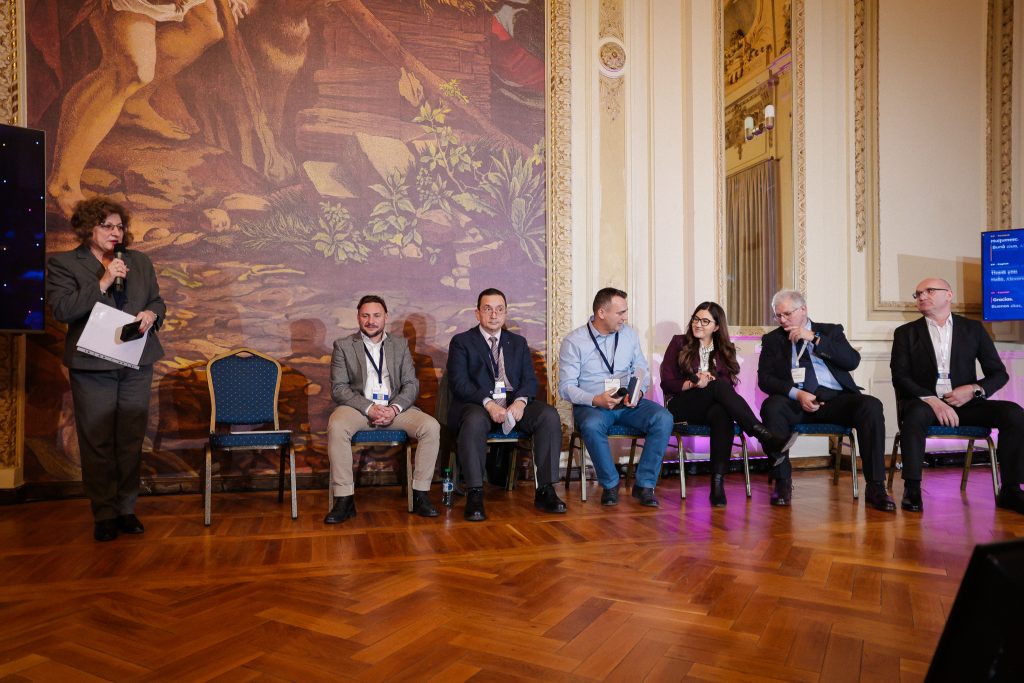
The debate titled “Romania Trains Bioengineers. How Do We Bring Them into Hospitals?”, opened by Prof. Diana Păun, Ph.D., began with an increasingly obvious reality: medical technology is evolving rapidly, but the organization of human resources in hospitals does not always keep pace.
What does a biomedical engineer do in a hospital? From preventing malfunctions to ensuring patient safety
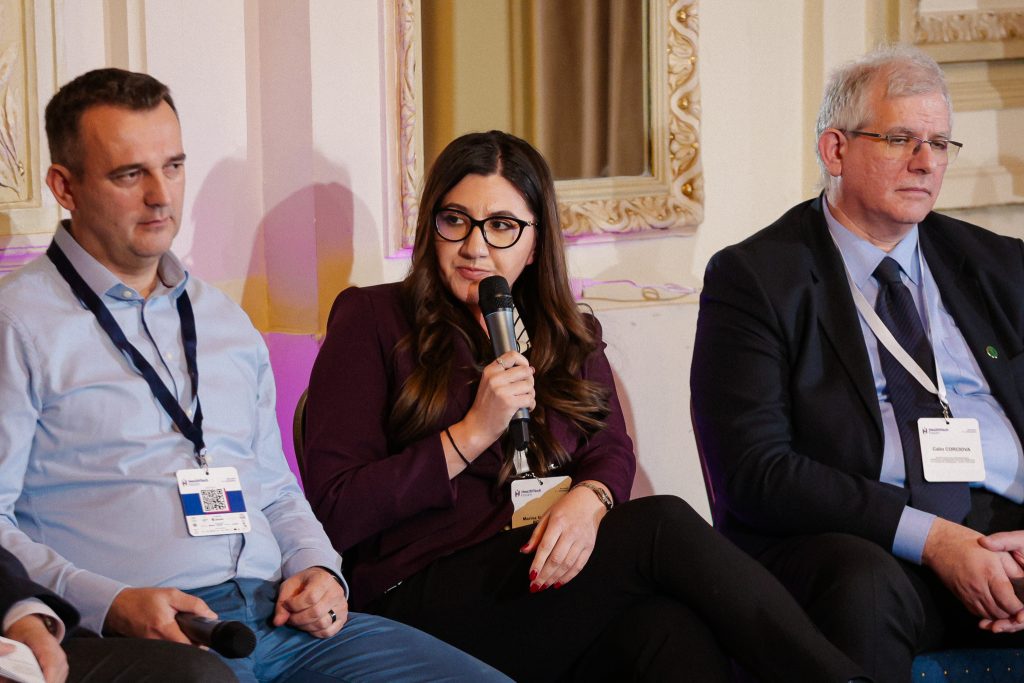
Marina Roman, a medical bioengineer at the “Sf. Spiridon” County Emergency Clinical Hospital in Iași, described her daily work at a facility with 28 operating rooms. Together with two other colleagues, she checks the equipment in the ICU and the operating room, monitors maintenance work, and helps draft specifications and maintain records of medical equipment. Her experience highlighted the difference between simply assigning someone to be in charge of the medical device registry and having a specialist with technical training.
Hospital administrators confirmed this need. Constantin Poiană, director of the “Prof. Dr. Eduard Apetrei” Hospital in Buhuși, explained that having a biomedical engineer on staff has changed the way the hospital manages its equipment and interacts with medical staff.
For his part, Associate Professor Cătălin Cîrstoveanu, Ph.D., presented the experience of the department he heads at the “Marie S. Curie” Children’s Emergency Clinical Hospital, where it was necessary to convert a position in order to hire a bioengineer.
The examples have shown that these specialists are not merely a technical resource, but a source of support for the continuity of medical care and for patient safety.
Clear division of responsibilities between the hospital and equipment suppliers
Ionuț Ionescu, Service Operations Manager at Philips Romania, explained that the medical engineer at the hospital serves as the link between clinical staff and service teams. Preventive inspections, early error detection, and technical communication can reduce the amount of time equipment is out of service.
Alexandru Florea, general director at ANMDMR, clarified the obligations regarding the record-keeping of medical devices and the designation of a responsible person in healthcare facilities. However, the discussion highlighted the need to delineate responsibilities: technical operations permitted for hospital staff must comply with the manufacturer’s instructions, while specialized service interventions are the responsibility of authorized operators and appropriately trained personnel. This clarification is important both for protecting patients and for defining the professional responsibilities of biomedical engineers.
Universities train specialists. How do we attract them to hospitals?
Victor Iliescu, an advisor at the Ministry of Education, explained that university programs must be aligned with occupational standards and labor market demands. Hospitals and companies can help update skills and organize practical training.
Prof. Călin Corciovă, a representative of the Faculty of Medical Bioengineering at the “Grigore T. Popa” University of Medicine and Pharmacy in Iași, presented the training model, which includes practical activities in hospitals and collaboration with specialists directly involved in the use of medical devices. Data presented during the panel discussion show that, of the 391 graduates of the faculty between 2020 and 2025, approximately 9.8% work in public hospitals, while other graduates choose private hospitals, medical equipment companies, the IT sector, or other fields.
The industry is already contributing to practical training. Philips Romania has introduced a program through which students participate in workshops, practical training sessions, and, in some cases, internships. The issue is not solely the number of graduates, but also the attractiveness of hospital positions—including in terms of pay, career opportunities, and recognition of skills.
From Debate to Solutions: Positions, Standards, and Professional Representation
The participants identified several areas for action: clarifying the regulatory framework, explicitly including bioengineering positions within hospital structures, determining staffing levels based on the number and complexity of medical devices, and strengthening partnerships between universities, hospitals, and industry.
One key point concerned the situation in intensive care units (ICUs), where there are provisions regarding the presence of biomedical engineers, but their implementation faces challenges related to the organization of positions. The discussion concluded with a proposal to continue the dialogue among all the institutions involved, with the aim of turning the recommendations into concrete measures.
A modern hospital needs not only state-of-the-art equipment, but also people who know how to integrate it, monitor it, and ensure it is used safely. The inclusion of bioengineers in hospital teams should be viewed as an investment in the quality of care, not merely as an additional personnel expense.
About the HealthTech Forum 2026
The 9th edition of the HealthTech Forum took place on November 5–6, 2026, at the Bucharest Chamber of Commerce and Industry, under the theme “Smart and Interoperable Hospitals, ” bringing together hospital administrators, doctors, government officials, representatives from academia, and technology companies.
The HealthTech Forum 2026 was held with the support of partners who promote dialogue and collaboration among healthcare professionals, government authorities, academia, and the medical technology industry: Giv Solutions, Clinomic Romania, InfoWorld, Tremend Publicis Sapient, Medtronic, Philips, IQVIA, Docviser, Soft31, Innovate IT, POLITEHNICA University of Bucharest, “Gr. T. Popa” University of Medicine and Pharmacy in Iași, Right Partner, the Association of Public Hospitals, the Association of Medical Product Suppliers, the HL7 Association, the Romanian United Foundation, Global Romania, PALMED, the National Institute for Research and Development in Informatics, the AI Human Leadership Organization, the Romanian Society of Anesthesia and Intensive Care, and the Bucharest Chamber of Commerce and Industry. Organizer: Oameni și Companii.