June 8, 2026
~1,200 beds — one of the largest public hospitals in Romania
300 different tests in the lab’s portfolio—and the range continues to grow
60+ people on the lab team
After Oradea and Suceava, laboratory automation is making its way into a different kind of setting: a public emergency hospital, where work never stops and time can make all the difference in clinical decision-making.
In a hospital like this, the lab does not operate on eight-hour shifts. It operates around the clock—with the same level of precision at midnight as it does in the morning. Here, automation is no longer just a way to improve efficiency, but a prerequisite for operation.
A large hospital, a lab under pressure
The Târgu Mureș County Emergency Clinical Hospital is one of the largest public hospitals in Romania and serves the largest SMURD unit in Transylvania. The laboratory’s workload is commensurate with the size of the institution.
Until the project began, the laboratory operated out of two separate locations: one dedicated to emergencies and one central facility for day-to-day operations. Two teams, two workflows, two parallel processes.
At the same time, laboratory medicine was becoming increasingly complex. The number of tests was rising, the range of tests was expanding, and the pressure on the team was mounting.
In recent years, about 20% of the lab technicians have retired—many of whom were part of the generation that opened the hospital in 1983.
““The need to deliver results as quickly as possible, given a heavy workload and a shrinking team—these were the factors that drove us toward automation.“
— Prof. Dr. Minodora Dobreanu, Head of the Clinical Laboratory at the Târgu Mureș County Emergency Clinical Hospital, Vice President of AMLR
An idea from 2020 and six years until implementation
Full laboratory automation did not come about simply because of funding. Prof. Dobreanu has been discussing this approach since 2020, after years of observing similar models in Europe and the United States.
The question was not whether this transformation was necessary. The question was when it would become possible.
The opportunity arose through a PNRR project focused on healthcare-associated infections. It wasn’t a program specifically designed for laboratory automation, but the hospital was able to make a very concrete case for the need: reducing response times for emergencies, minimizing manual specimen transport routes, and introducing new diagnostic tests.
An important part of the project was the installation of a pneumatic tube system to transport biological samples to the laboratory—reducing sample transit time and eliminating much of the manual transport throughout the hospital.
When You Automate a Hospital That Can't Shut Down
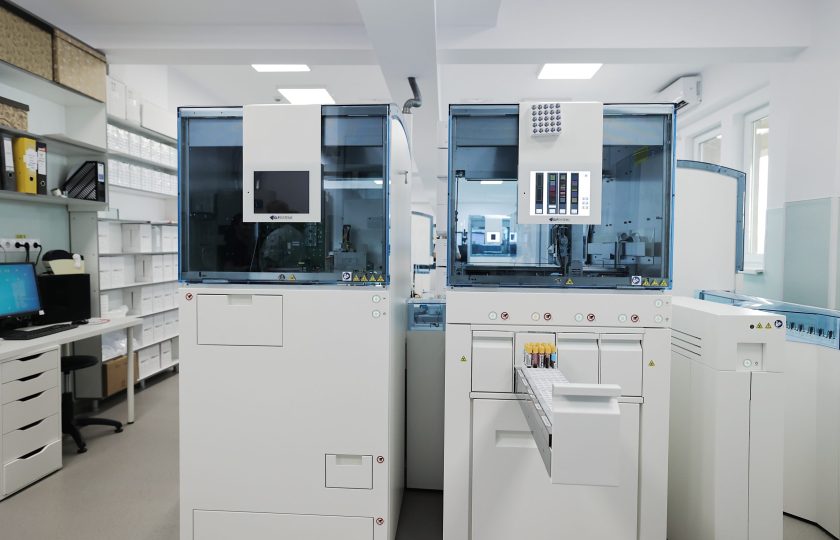
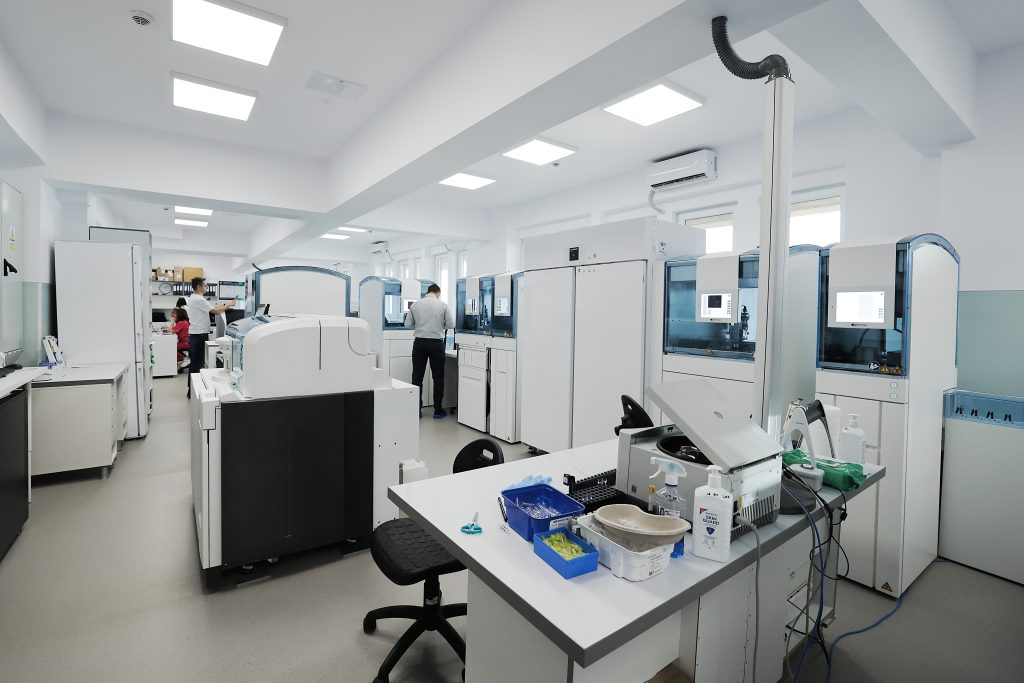
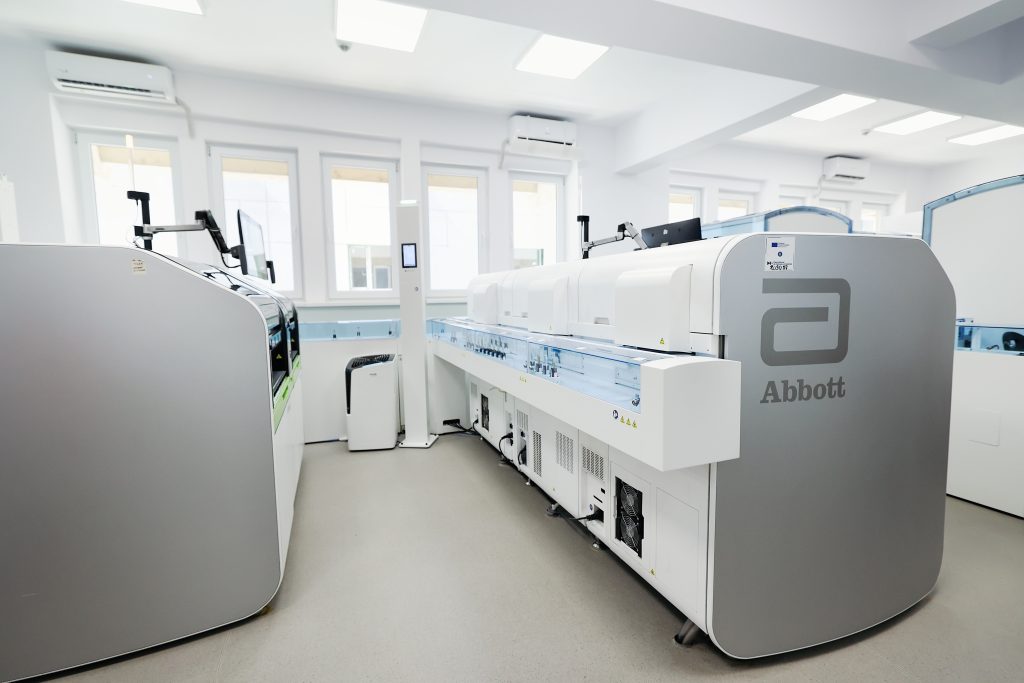
Implementing full automation required a complete reconfiguration of the existing laboratory.
Six rooms were combined to create the space needed for the new automation line. This was made possible by the building’s structure, which allowed for the reorganization without major alterations to the load-bearing structure.
In reality, infrastructure is becoming one of the major challenges of automation in public hospitals: the existing infrastructure. In new hospitals, workflows can be designed from the ground up. In older hospitals, they must be redesigned while operations continue.
““If I had built it from scratch, it would have been easier. But it turns out it can be done this way, too.“
— Prof. Dr. Minodora Dobreanu
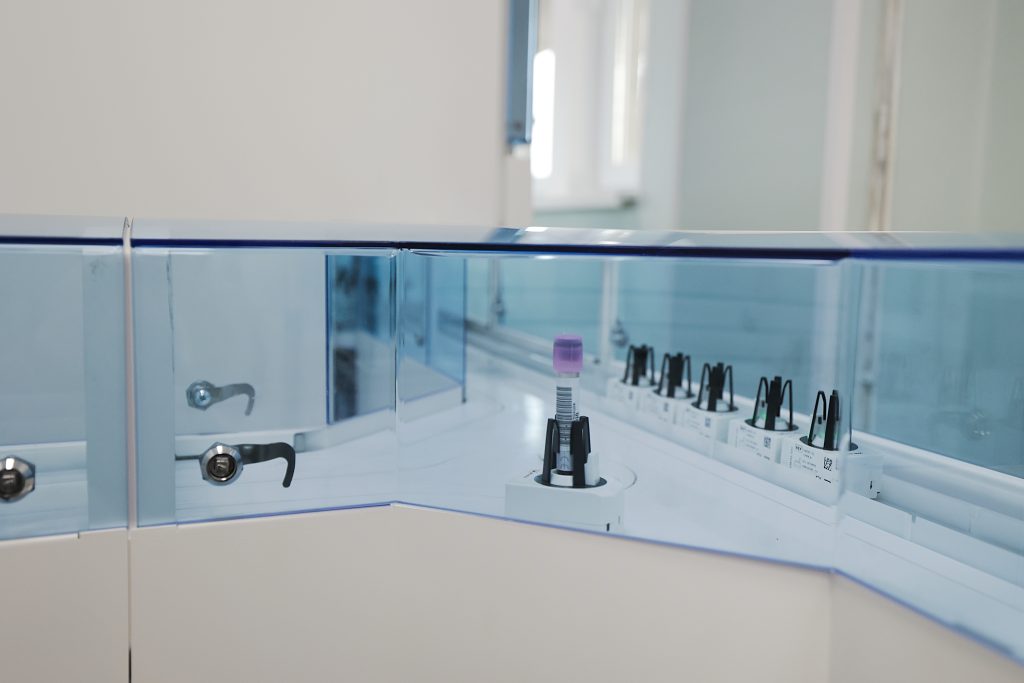
One factor that made this adaptation possible was the modular nature of the automation system. The configuration is not fixed but can be adapted to the available space and the specific characteristics of each laboratory. In Târgu Mureș, this flexibility was essential: the infrastructure had to be adapted, not completely replaced.
A faster—and, more importantly, safer—lab
In an emergency lab, speed isn't just about operational efficiency. It's about a doctor's ability to make a decision faster.
But the real value isn't just in the robotic line. It lies in integration.
In a fully digitized laboratory, information flows just as quickly as the specimen. Urgent cases are automatically prioritized, results are compared with the patient’s medical history, and errors can be detected before they reach the doctor.
““The greatest benefit of full automation doesn’t come from the robotized production line. It comes from integration with the IT system and what you can do with the data in post-analysis.“
— Prof. Dr. Minodora Dobreanu
This is where the difference between an automated lab and a smart lab begins.
The error that technology detects before humans do
A significant portion of laboratory errors do not occur in the analyzer, but rather before the sample reaches it—or after the result is generated.
In an integrated system, the laboratory can more quickly identify results that cannot be explained medically, compare current values with the patient's history, and flag anomalies in real time.
The same principle applies to quality control. Instead of periodic checks, digital systems enable continuous monitoring and rapid detection of technical deviations.
Not a few hours later. The moment they appear.
What Happens to People
The question comes up in every automation project: What happens to the staff?
In Târgu Mureș, the solution was not to downsize the team, but to reassign roles.
Repetitive tasks are handled by the system. But the laboratory gains the ability to introduce new techniques and conduct more complex tests: mass spectrometry, neonatal screening, molecular biology, and therapeutic monitoring.
““Full automation reduces human intervention in repetitive tasks, which robots perform much more accurately. They don’t get tired. But when it comes to interpreting test results and introducing new techniques—that’s where the human element is essential and will remain so.”“
— Prof. Dr. Minodora Dobreanu

Automation does not eliminate human expertise. It shifts it to where it is most valuable.
The Voice of the Profession
Prof. Dobreanu also speaks on behalf of the Romanian Association of Laboratory Medicine, where he serves as vice president.
From this perspective, he sees the need for better standards of quality, integration, and the exchange of expertise among laboratories.
One of the projects coordinated by AMLR involves the exchange of samples among nearly 100 laboratories in Romania for external quality control. Another project aims to develop reference ranges specific to the Romanian population, using anonymized data from major laboratories across the country.
Advice for those just starting out
Prof. Dobreanu makes an important distinction: full automation is not the right solution for every laboratory.
For large laboratories with high throughput and continuous operations, the investment may be justified. For smaller laboratories, digitization can begin gradually—through integration solutions, sample management, or quality control.
What's important is that the technology meets a real need.
““Every lab needs to draw up a clear list of what it wants to achieve and what resources it has available. The solution must address the actual need, not what looks impressive on paper.”
— Prof. Dr. Minodora Dobreanu
In Târgu Mureș, the full automation of the laboratory is still underway. The robotics line has been installed. The team is preparing to introduce new techniques.
But the direction is already clear. The workload is increasing. Medicine is becoming faster, more complex, and more data-driven. In an emergency hospital, speed and precision are no longer competitive advantages, but rather basic requirements for operation.