May 29, 2026
4 hours → 1 hour Time from harvest to results — the difference brought about by automation
Such models already existed abroad. In Oradea, the challenge was not only to automate the laboratory but also to completely reorganize operations following the merger of the city’s five public hospitals into a single healthcare system.
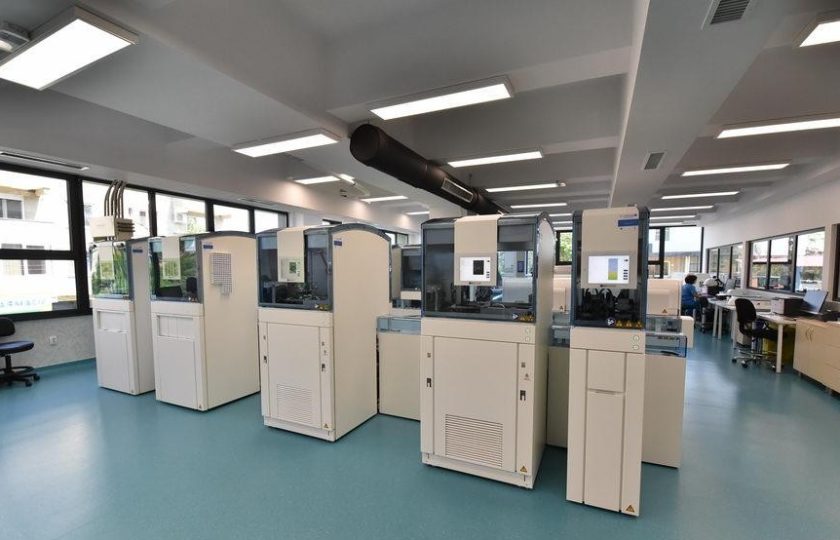
In this context, the operations of the five separate laboratories were consolidated into a single integrated laboratory, built around fully digitized and automated workflows.
From 5 separate laboratories to a centralized, fully digitized system
At the Bihor County Emergency Clinical Hospital, digitization was not an end in itself, but rather the result of a real need and a strategic management decision.
More than a decade ago, the local government and hospital administrators in Oradea launched an ambitious initiative: to consolidate the medical facilities under the city’s jurisdiction into a single entity. This model did not exist in Romania at the time, and the legislative framework had to be adapted to make this consolidation possible.
The result was unprecedented: five previously independent hospitals were merged into a single system—now the largest hospital in the country, with approximately 2,000 beds.
The unification changed the way the entire system operated. The hospitals became a single entity, with a single management structure and, consequently, the need to uniformly control and coordinate critical processes.
In practice, however, the laboratory remained fragmented. Each of the five hospitals continued to operate with its own laboratory, its own equipment, and its own workflows.
This model leads to duplication of effort, high costs, and significant differences in work processes and results.
In this context, the idea of building a single, centralized laboratory to process samples from all five medical facilities became a logical next step in the unification process.
But this solution, in turn, introduced a new level of complexity: the samples had to be transported from different locations under optimal conditions, as quickly as possible, processed in a centralized facility, and then the results had to be transmitted rapidly back to the departments at the five hospitals.
This is actually where the transformation of the lab begins.
The Decision: From Vision to Implementation
Inspired by models seen abroad, particularly in Hungary, the hospital’s leadership realized that the future lies not in the local optimization of each laboratory, but in an integrated, centralized, and automated model.
The idea was conceived around 2013, but its actual implementation began much later, after legislative and structural obstacles were resolved, and was completed in 2022 with the inauguration of the new laboratory.
An important factor was that the laboratory was built in a completely new building, designed from the ground up for automated workflows.
“It’s much easier to build it right from the start than to adapt an existing space.”
— Dr. Georgeta Marcela Botă, Laboratory Director, Bihor County Emergency Clinical Hospital, Oradea
In practice, this means not just space, but infrastructure: power supply, networking, and dedicated areas for equipment and storage—elements that, in existing buildings, often pose major constraints.
What Has Changed — in Numbers and in Practice
After implementation, the results were measurable. Today, the laboratory processes approximately 2,500 samples per day. This is not only because the work of the five laboratories was consolidated into a single processing center, but also because automation has enabled the development of partnerships with external medical institutions, thereby becoming a source of revenue for the hospital.
The difference is most evident in the time from sample collection to the validated result—the so-called turnaround time—which has decreased significantly: from 3–4 hours to about one hour for routine tests, and from one hour to 30 minutes for urgent tests.
Equally important is reducing errors. Before automation, a significant portion of the problems occurred before the blood sample reached the analyzer—during labeling, handling, or transport. After implementation, the error rate dropped below 1%.
And the costs followed the same pattern.
“It’s not the same to run tests in five different places as it is to run them in a single lab, with high throughput and standardized processes.”
— Dr. Georgeta Marcela Botă
Under this model, total costs have fallen by about 30%. For a public hospital, this means not only savings but also the ability to handle large volumes with the same resources.
Automation has meant not only greater efficiency but also expansion. Today, the laboratory performs a significantly broader range of tests, including those that were previously not feasible due to time and resource constraints.
Beyond the Numbers: Oversight
One of the most important changes is the complete traceability of the sample. Every step—from collection to transport, analysis, and storage—is monitored in real time.
“We know exactly where the sample is—whether it’s on the line, at the analyzer, or in the refrigerator.”
— Dr. Georgeta Marcela Botă
This traceability changes the way we work. The process no longer depends on manual interventions and spot checks, but operates as a continuous system in which every step is monitored.
A direct result of this level of control is flexibility. In certain situations, additional analyses can be added without the need for a new sample collection, as the system automatically identifies the sample, processes it, and reintegrates it into the workflow.
A Change in Mindset
As with most projects of this kind, the technology wasn't the hardest part. It was getting people to adapt.
At first, the reactions were cautious. The change in work procedures and the transition to an automated system were met with reluctance.
"At first, they wanted to go back to the old ways..."
— Dr. Georgeta Marcela Botă
The adjustment came gradually, through training and hands-on experience. The turning point was unexpected: a temporary system outage that forced the team to revert to their previous way of working.
“When the system went down temporarily and we went back to the old way of working, the reaction in the lab was very clear: no one wanted to work the way they had before.”
— Dr. Georgeta Marcela Botă
By then, the difference had become all too obvious.
What Happened to the People
The inevitable question in any automation project concerns the impact on staff.
There were no layoffs in Oradea. The total number of employees decreased gradually as vacant positions were not filled.
“I didn’t fire anyone. It was a long-term strategy.”
— Dr. Georgeta Marcela Botă
At the same time, roles have changed. Manual tasks have been eliminated, and the team has shifted its focus to more complex activities, including analyses that previously could not be performed due to time constraints.
Automation hasn't replaced people. It has changed the way they work.
Why It Worked
Beyond the technology, the decisive factor was the team—the alignment between management, the lab, local government, and the technology partner.
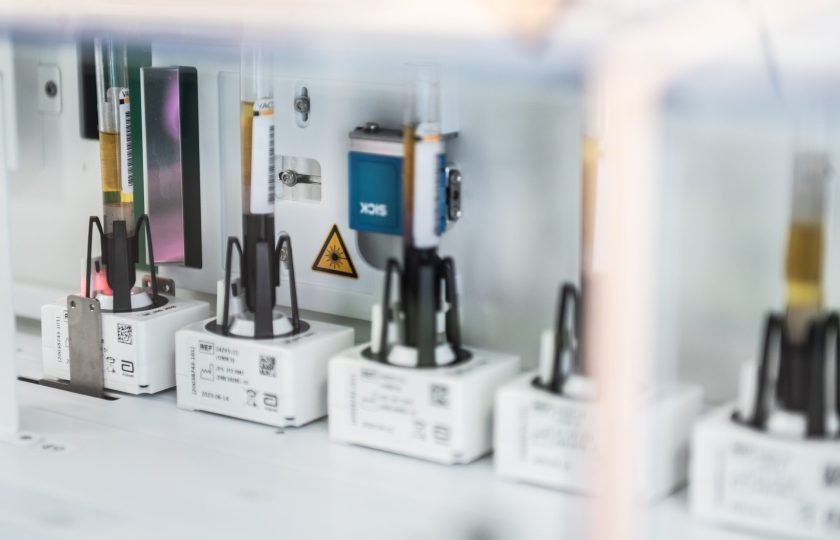
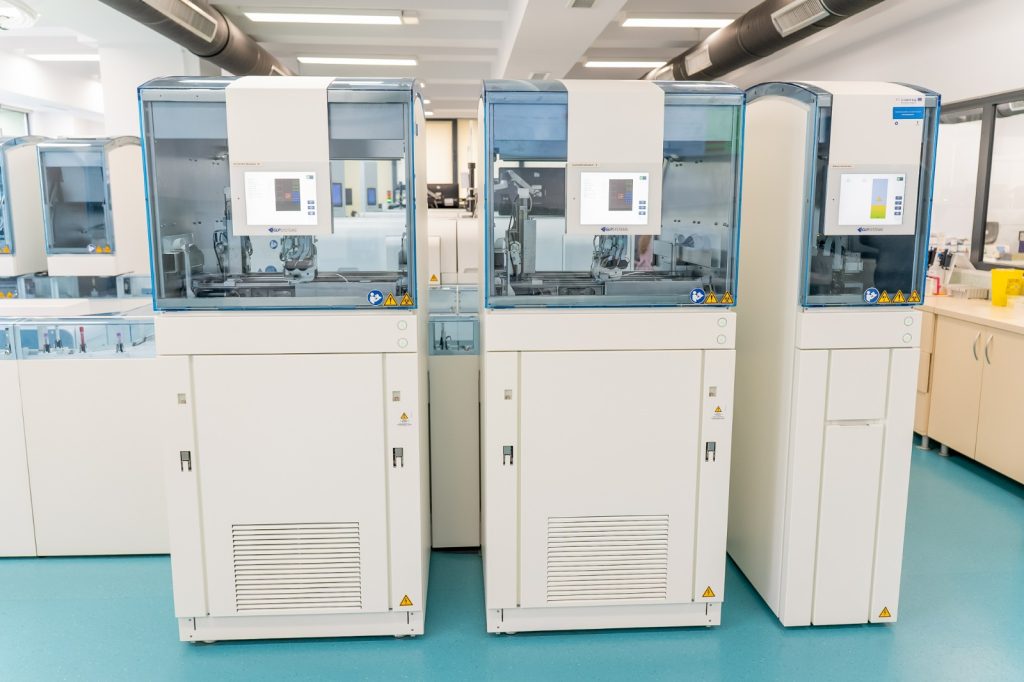
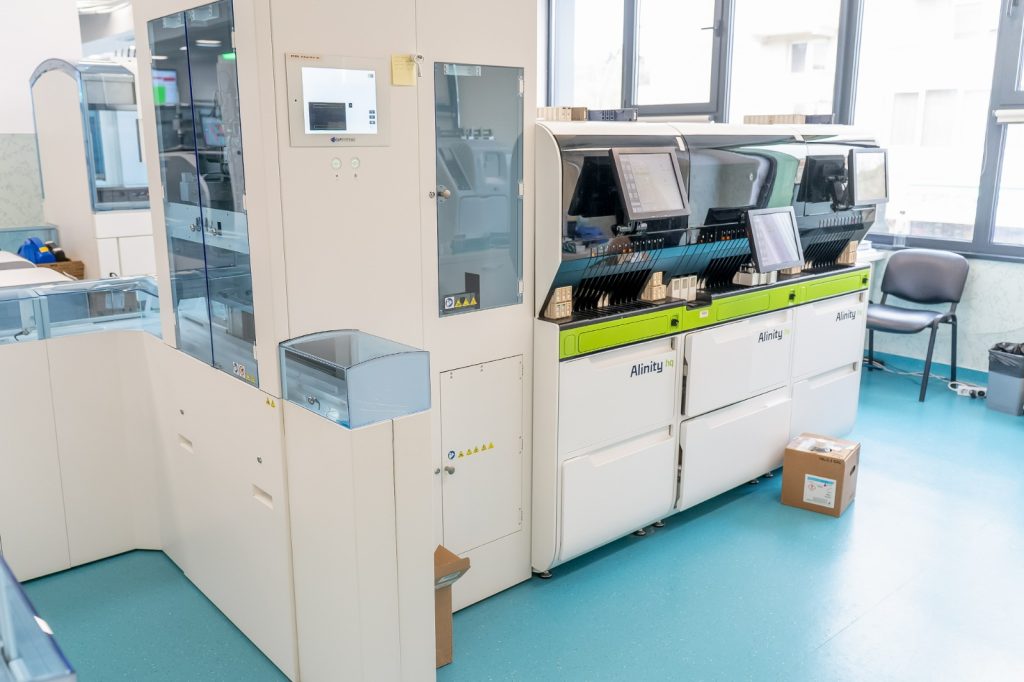
Another key factor was the relationship with the supplier, which went beyond simply installing an Abbott automation line and evolved into a long-term partnership—including integration consulting, workflow adaptation, and phased system development in collaboration with the lab team.
“It’s very important to work closely with the supplier. It’s not enough to just install the equipment and move on.”
— Dr. Georgeta Marcela Botă
Equally important was the implementation approach: phased, with gradual adaptation, rather than a “one-time” project. The transformation began with the main test workflows (chemistry and immunology) and was gradually expanded to the other segments as the team adapted and the system stabilized.
For hospitals that want to launch such a project, the recommendation is clear: gradual implementation and patience.
“The solution isn’t to try to do everything at once. Take it step by step, until the team gets used to it.”
— Dr. Georgeta Marcela Botă
From a local solution to a model
The project was conceived as a solution to an internal problem, with no intention of becoming a model.
Interest developed later. Representatives from several hospitals across the country attended the 2022 opening, and visits continued thereafter, including from other countries in the region.
Those who attended had an advantage that Oradea didn't have: they were able to see a system in action, not just a concept.
For some, this visit was enough to make a decision.
That is how the model began to be replicated—in Suceava, at the Dorna Medical Center, and then in the public hospitals in Târgu Mureș and Cluj-Napoca, with each adapting the solution to its own context.
Some of the first inspirational visits took place in Hungary. After the initiative was implemented, the trend reversed: hospitals in Hungary came to Oradea for inspiration.
In fact, Oradea’s experience shows that digitization is not a project with a clear endpoint. It is an ongoing process of refinement, expansion, and adaptation—as new needs and opportunities arise.
The Next Step
The direction of development is already taking shape.
The next goal is to expand the model to the entire county by establishing a central laboratory to serve all medical facilities in Bihor.
Such a model would mean standardization, lower costs, and comparable results—not just at the hospital level, but at the system level.
For those looking at Oradea today, the question is no longer whether it’s possible. It’s whether they’re ready to get started—and when.