November 16, 2026
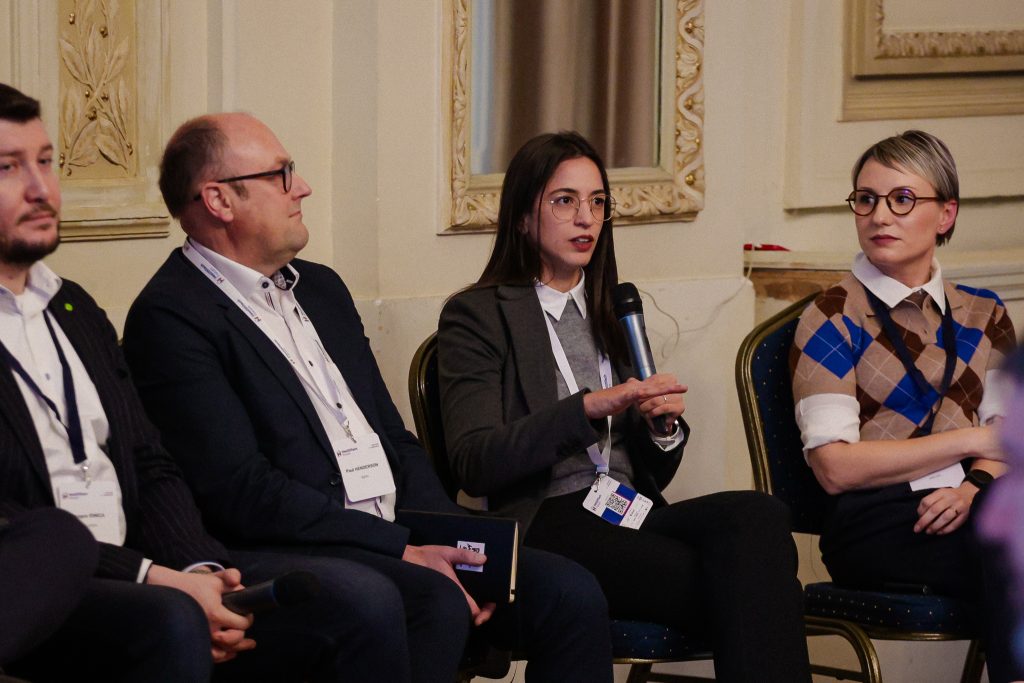
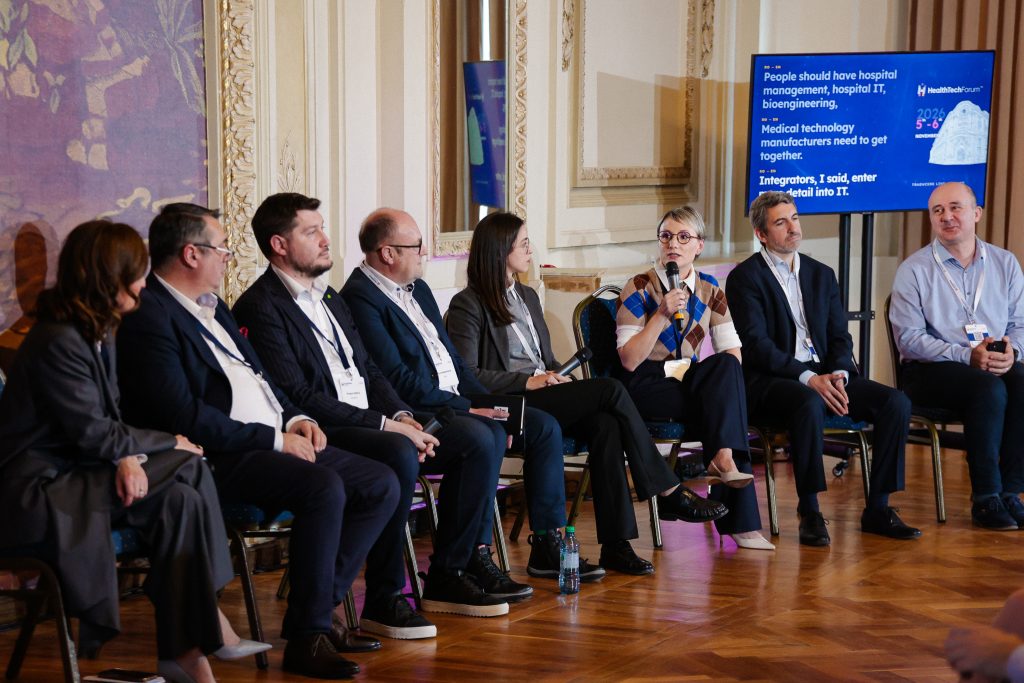
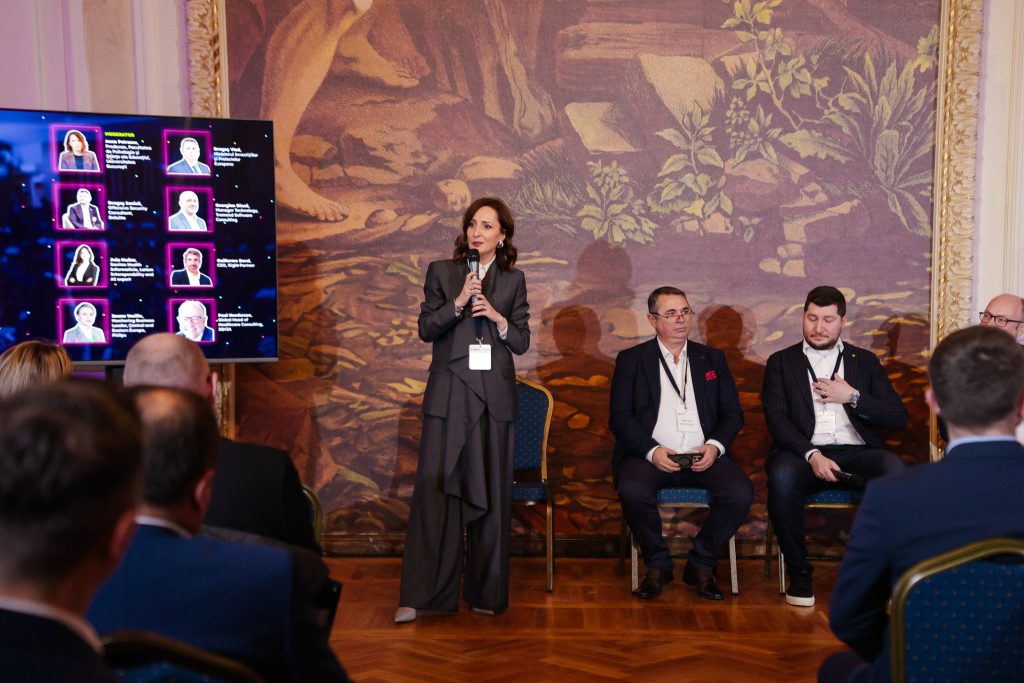
How can medical data be used to improve patient care without compromising patient privacy and security? Who is held accountable when IT systems become vulnerable? These questions were the focus of the panel discussion “Responsible and Ethical Data Management in Healthcare,” held as part of the 9th edition of the HealthTech Forum.
Held on November 5–6, 2026, at the Bucharest Chamber of Commerce and Industry under the theme “Smart and Interoperable Hospitals, ” the HealthTech Forum 2026 brought together hospital administrators, doctors, government officials, international experts, and technology companies to identify solutions for modernizing the healthcare system.
Patients should no longer be responsible for transferring their own medical data
Using the example of a patient who visits, in succession, a lab, a doctor’s office, a hospital, and a pharmacy, Georgian Dincă, Technology Manager at Tremend, highlighted one of the main problems with the current system: medical information remains fragmented across providers.
“The patient is the conduit through which the healthcare system transfers data from the hospital to the pharmacy, from the pharmacy to the hospital, and from the lab to the family doctor,” he explained.
The implementation of the European Health Data Space (EHDS) will impose new requirements for the cross-border exchange of medical information, with key implementation milestones in 2029 and 2031. The goal is for doctors to be able to access relevant information about a patient—regardless of the institution or country where the patient is receiving care—in a secure and transparent manner.
Trust in digital systems is built through transparency and the quality of information
Joia Nuñez, an expert in digital transformation, explained that interoperability is not just a technical challenge, but also an organizational and ethical one. Patients are particularly concerned about the confidentiality of their information, who can access it, and for what purpose. Healthcare professionals, on the other hand, prioritize data accuracy and its usefulness for clinical decision-making. The trust of both groups is essential for the adoption of digital solutions.
According to Ioana Vasiliu, Monitoring Business Leader for Central and Eastern Europe at Philips, it is important to integrate the information generated by vital signs monitors, ventilators, infusion pumps, and other medical equipment. This data must be available to the appropriate clinician at the right time to support continuity of care.
Participants emphasized that interoperability also requires collaboration among hospital management, medical teams, IT specialists, bioengineers, and technology providers, so that solutions are built around the patient journey.

Cybersecurity is a patient safety issue
Dragoș Ionică, an Offensive Security Consultant at Deloitte, pointed out that a cyber incident at a hospital can have direct consequences on medical operations. The unavailability of IT systems can affect patient monitoring, diagnostic procedures, and access to information essential for treatment. He emphasized that merely complying with security requirements is not enough if the organization does not periodically test its ability to respond to and recover from an incident.
“Any incident response plan must be tested,” he said. In his view, hospitals must consider security across the entire ecosystem, including connected medical devices, not just software applications.
Another issue discussed was the clarification of responsibilities between hospitals and technology providers, including through contracts that establish obligations regarding updates, monitoring, and response to incidents.
Digital transformation does not end with the implementation of technology
Guillermo Borrell, CEO of RightPartner, pointed out that one of the most common mistakes in digitization projects is viewing the launch of a system as the end of the transformation. Experience from projects in Latin America shows that, without changes to processes and organizational culture, hospitals risk reverting to their previous practices, even after significant technological investments.
Success requires management involvement, the active participation of physicians in designing solutions, and the establishment of performance metrics from the very beginning.
For his part, Paul Henderson, Global Head of Healthcare Consulting at IQVIA, highlighted the link between the responsible use of data and the financial sustainability of healthcare services. Integrated data provides a better understanding of costs, the complexity of services, and how resources can be used efficiently without compromising the quality of care.
Data governance must ensure access, security, and fairness
Dragoș Cristian Vlad, a representative of the Ministry of Investments and European Projects, emphasized that data governance is the foundation of digital transformation. “Digitization should be that extra specialist who helps the medical specialist and the citizen make the best decision together,” he said.
The discussion highlighted the need for secure and resilient infrastructure, the role of cloud solutions, the development of digital skills, and the establishment of clear mechanisms for accessing information. The debate also addressed the issue of equity: digitalization must not exclude people who lack digital skills or access to electronic devices.

The panel’s conclusion: responsible management of medical data means more than just complying with technical and legal requirements. It means building an ecosystem in which information flows securely, responsibilities are clear, and technology supports medical decisions, protects patients’ rights, and helps improve care.
The HealthTech Forum 2026 was held with the support of partners who promote dialogue and collaboration among healthcare professionals, government authorities, academia, and the medical technology industry: Giv Solutions, Clinomic Romania, InfoWorld, Tremend Publicis Sapient, Medtronic, Philips, IQVIA, Docviser, Soft31, Innovate IT, POLITEHNICA University of Bucharest, “Gr. T. Popa” University of Medicine and Pharmacy in Iași, Right Partner, the Association of Public Hospitals, the Association of Medical Product Suppliers, the HL7 Association, the Romanian United Foundation, Global Romania, PALMED, the National Institute for Research and Development in Informatics, the AI Human Leadership Organization, the Romanian Society of Anesthesia and Intensive Care, and the Bucharest Chamber of Commerce and Industry. Organizer: Oameni și Companii.